
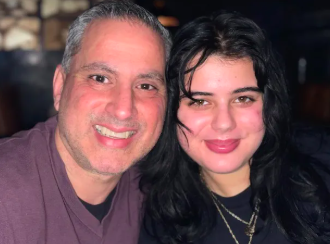
As my family approaches the first anniversary of our daughter Katie Abraham’s death, the pain has not dulled. It has deepened.
Katie was just 20 years old when she was killed on January 19, 2025, on the streets of Urbana, Illinois. She was struck and killed by a drunk-driving illegal alien—Julio Cucul-Bol—who was living in our state under an alias, with false documentation, and with an incurable communicable infectious disease. He fled the scene and attempted to escape to Mexico. Only after three agonizing days did we learn he had been apprehended.
Since that night, we have been living in the lowest valley imaginable—one with no clear way out. Katie was our youngest daughter. Her absence is not something you “move on” from. It is an unfillable void that grows heavier with time, especially as the anniversary approaches.
Over the past year, I’ve been asked many questions. Some come from genuine compassion. Others are clearly driven by ideology. I want to address several of them directly—not just for our family, but for anyone who believes these conversations should be grounded in truth rather than political convenience.
“God has a plan for everyone.”
I believe this is usually said with sincere intent—to offer comfort, to help us find peace. But I reject the idea that God’s plan for Katie was to be killed on the streets of Urbana, aided and abetted by Illinois sanctuary policies that protected her killer.
God does not give a young woman extraordinary talents, kindness, and promise so her life can be extinguished in a violent and senseless act. What happened to Katie was not divine design. It was the result of human choices—of uncaring, self-serving, and calculated policies created by arrogant politicians who manufactured an environment where evil could thrive and accountability could be evaded.
“This is the compassionate way forward.”
Unfettered entry without vetting, background checks, or health screenings is not compassion—it is recklessness.
Consider Bol. He entered our state using an alias. He carried an incurable communicable infectious disease. Illinois neither protected the public nor helped him. That is not compassion.
Bol testified in court that he cannot read or write in any language and never attended a single day of formal schooling. So what was Illinois’ compassionate plan for him? Education? Job training? Medical supervision? None of the above.
This was not mercy. It was indifference—toward him and toward every family sharing our communities. Our leaders knew people would die as a result of these policies, and they accepted that cost for political self-preservation.
“Would you feel better if a white citizen had killed Katie?”
This question is as misguided as it is revealing. Reducing death and policy failure to race is a moral failure of its own.
I am the son of a legal immigrant from a third-world country. We don’t even identify as “white.” But race is irrelevant. Had policies created an environment that allowed anyone—of any color—to kill Katie, I would be speaking out just as forcefully.
There is, however, a critical difference between a citizen and someone here illegally. A citizen cannot flee to another country to evade justice. If Katie had been killed by a citizen, our family would not have endured three days of anguish wondering whether her killer would ever be caught.
“This is a drunk driving issue, not an illegal immigration issue.”
It is both.
Yes, drunk driving is a serious problem. But Bol should never have been in our state. A minimal background audit would have prevented this entirely. Illinois failed Katie—and it failed Bol—by refusing to assimilate, enculturate, or supervise the people it claims to compassionately welcome.
Illinois sets these individuals up for failure and the rest of us up for tragedy.
“Immigrant families are being separated.”
Families are separated every day—including mine.
Katie has been taken from us permanently. She is not in a detention center. She is not in another country. We will never see her again. Her future—marriage, children, a life fully realized—was erased. Her bloodline ended the night she was killed.
That reality is never acknowledged by those who speak so casually about “compassion.”
“Citizens commit more crime than illegal aliens.”
This claim has been repeatedly debunked, yet it persists. But even if we accepted it for the sake of argument, what is the logical conclusion? That because crime exists domestically, we should import more of it? That background checks and enforcement don’t matter?
This argument defies reason.
“Why allow DHS/ICE to use Katie’s name in a Chicago operation?”
I support DHS and ICE wherever they operate. No family—whether in Urbana, Chicago, or anywhere else—should endure what we have endured.
Most of our family and friends live in the Chicagoland area. Their safety matters, too.
“Why do you approve of DHS/ICE tactics in the Midway Blitz?”
This did not have to look the way it did.
From the beginning, I’ve said that failure at the front end guarantees chaos at the back end. That is exactly what we are seeing now. But responsibility does not fall on DHS and ICE alone. Cook County officials and the governor share it.
Rather than working—even minimally—with federal authorities to apprehend individuals outside our communities, Illinois leaders prefer chaos. They need it as a deflection tool against DHS, ICE, and President Trump. It is not leadership. It is political theater—and Illinois families deserve better.
Katie’s death was preventable. Saying that does not bring her back, but refusing to say it guarantees more families will join ours in grief.
One year later, we are still here—still broken, still grieving, and still speaking. Because silence is what allowed this to happen in the first place.